When Your Freight Broker Actually Knows You
How Amark Logistics turns relationships and personal accountability into proactive freight management.
In freight transportation, service exceptions are inevitable. A missed pickup, unexpected charge, transit delay, delivery problem or incorrect shipment detail can quickly become more than an operational issue for the person responsible for that freight.
At Amark Logistics, the team understands those consequences because it knows the people and businesses behind the shipments it manages. What may appear to be a routine freight exception can have very real consequences for a customer.
That understanding has shaped the way Amark approaches freight management. The goal is not simply to react quickly when problems occur, but to anticipate as many of them as possible before they inconvenience the customer.
Freight becomes personal when you know the people depending on you.
Built on Relationships from the Start
Amark’s relationship-first culture was not developed as a marketing strategy. It grew organically from the way the company operated from the beginning — through close personal relationships, shared trust and a genuine sense of responsibility to one another.
As leadership passed from one generation to the next, that mindset remained. The people changed, the company grew, but the importance placed on relationships did not.
That foundation still matters because it reflects something central to Amark today: strong businesses are built by people who know one another, trust one another and understand the responsibility that comes with being depended upon.
Many employees, customers, carriers and partners have contributed to Amark’s success over the years, and that emphasis on relationships continues to influence how the company works with all of them.
Amark takes the time to know the people it serves, understand how their businesses operate and function as an extension of their organization rather than simply another freight vendor.
When Freight Becomes Personal
There is a practical consequence to knowing the people behind the freight.
A missed pickup is no longer simply an exception on a computer screen. An unexpected accessorial charge is not just another line on an invoice. A delay is not merely a change in estimated delivery.
Those consequences eventually land somewhere.
That may mean a transportation manager explaining an unexpected charge, a salesperson answering to an unhappy customer, a production team waiting on material or someone spending time solving a problem they never expected to have.
Amark thinks about those situations in human terms. Customer relationships should be personal enough that letting someone down feels less like missing a service metric and more like disappointing someone you genuinely care about.
That mindset does more than create urgency after something goes wrong. It creates a reason to look for the problem before it happens.
The same philosophy exists inside Amark itself.
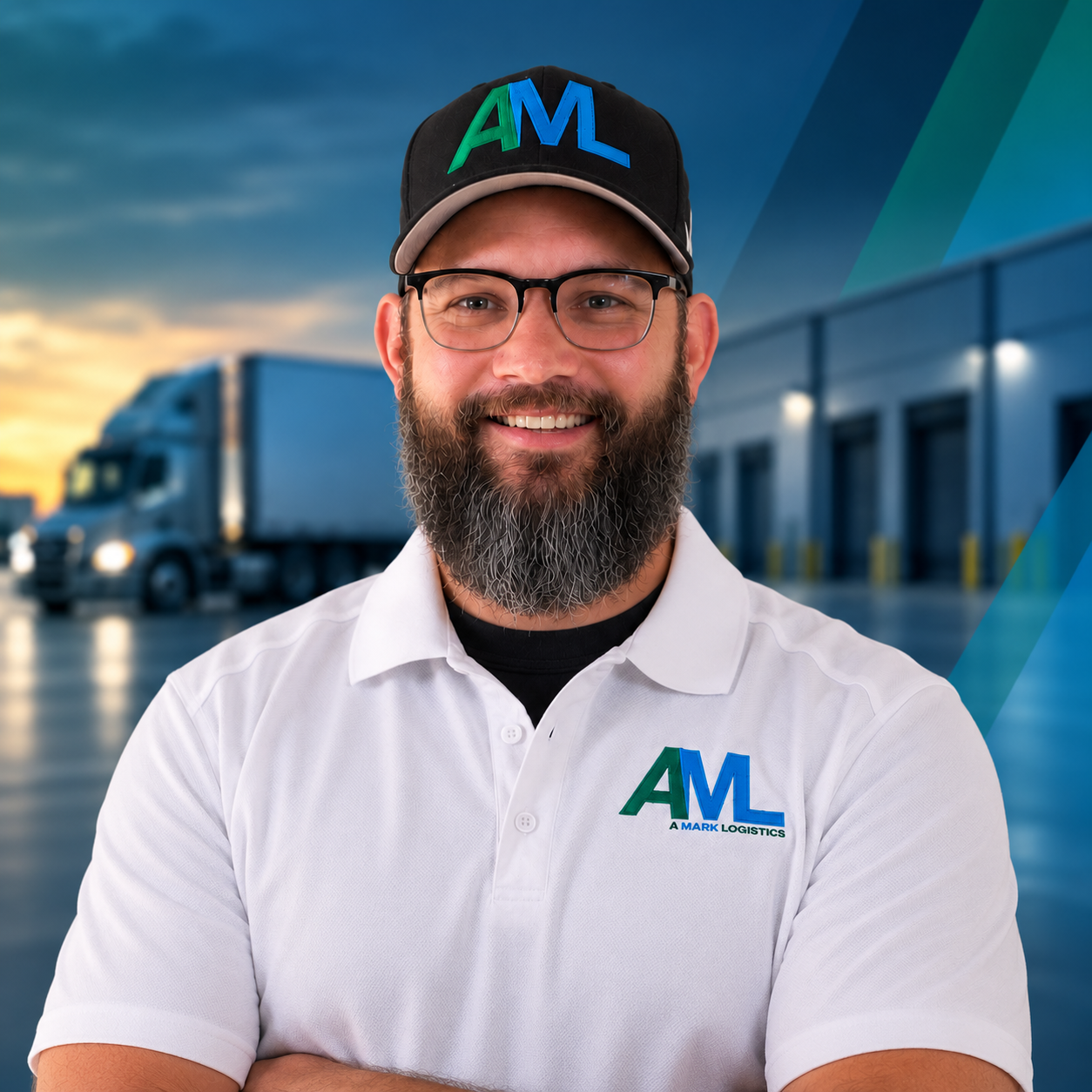
As Richie Keane, Director of Operations, describes it:
“We know each other’s families and who we’re all showing up for every day. That creates a level of trust and accountability that’s hard to manufacture. We know who we’re bringing our A-game for.”
That same trust and sense of accountability extends to the relationships Amark builds with its customers.
One customer put it simply: “Sometimes I think Amark cares more about our freight than we do.”
Amark considers that one of the highest compliments it could receive because it captures the kind of relationship the company values most: a true partnership where Amark is invested enough to ask questions, anticipate problems, follow through and take ownership.
The Best Freight Problem May Be the One That Never Happens
That relationship-first philosophy shows up most clearly in Amark's approach to proactive freight management.
Many freight problems do not actually begin when something goes wrong.
They begin earlier.
Information is incomplete. An assumption goes unchecked. A delivery requirement is overlooked. A pickup window is misunderstood. An accessorial need is never discussed. The next question never gets asked.
By the time the problem becomes visible, the freight may already be moving.
Amark believes there is tremendous value in identifying those issues early, while there is still time to prevent them from becoming larger problems.
Before a shipment leaves the dock, the team reviews shipment information for potential pricing, transit, service and accessorial concerns. Shipment requirements are verified. Pickup arrangements are coordinated and confirmed. Potential restrictions or inconsistencies can be addressed before they affect the shipment.
The goal is not to pretend that every transportation disruption can be prevented. Freight moves through a complicated network of drivers, terminals, docks, weather conditions, customer requirements and carrier service constraints.
The goal is to eliminate as many avoidable surprises as possible.
Once the shipment is moving, that responsibility continues. Amark monitors freight in transit, communicates potential delays or service concerns, confirms delivery and obtains relevant delivery documentation. When something does go wrong, the company remains involved through resolution rather than simply directing the customer to deal with the carrier.
Customers should not learn about a preventable issue from a carrier invoice or hear about a delay for the first time from their own customer.
Better Relationships Create Better Freight Management
There is another reason knowing the customer matters.
What matters most in freight management varies from customer to customer.
One customer may place a premium on pickup reliability because delays disrupt its operation. Another may be focused on controlling accessorial exposure. Another may have strict delivery requirements that leave little room for error. Another may value communication above almost everything else because its team needs accurate information quickly.
The better Amark understands a customer's operation, the better the team can recognize which details matter most and where problems are most likely to create disruption.
That is where relationships become more than a cultural talking point. They become an operational advantage.
A freight broker can know the origin, destination, weight and class of a shipment without truly knowing the customer.
A logistics partner should know both.
Technology Should Support Accountability, Not Replace It
Modern freight management depends on technology, and Amark embraces it.
Transportation management systems, carrier connectivity, automated pricing and shipment visibility help logistics professionals work faster, process more information and make better-informed decisions.
But technology is only part of the equation.
It can surface information, compare options, automate repetitive tasks and improve visibility. What it cannot do on its own is understand why a particular shipment matters to a particular customer — or take personal responsibility when something needs attention.
That still requires people.
Amark believes technology should make transportation professionals better at serving customers, not put more distance between the people managing the freight and the people depending on it.
Technology provides speed, information and efficiency. Experienced people provide judgment, communication and accountability.
The Partner You Would Notice If They Were Gone
Amark's goal is not simply to become bigger. It is to become more valuable to the customers who depend on it.
It strives to be the logistics partner a customer would immediately miss.
That kind of value is not created through rates, carrier access or technology alone.
It is earned through the smaller moments that happen every day: catching an incorrect detail before pickup, confirming a carrier will arrive before the shipper closes, communicating a potential delay before the customer has to ask, obtaining the delivery documentation someone will need later, or staying involved when a shipment does not go according to plan.
Those moments matter because freight decisions have consequences beyond the shipment itself. They affect the people responsible for the freight, the customers counting on it, the schedules built around it, the costs associated with it and the relationships and reputations that depend on it.
That relationship-first foundation has carried across generations. What has endured is more than the business itself.
It is the belief that business works differently when people know one another, understand what is at stake and take the outcome personally.
That belief still shapes how Amark serves its customers today.
For Amark Logistics, freight becomes personal when you know the people depending on you.
And the strongest partnerships are the ones whose value is felt every day — and whose absence would be felt immediately.
Explore More About Amark Logistics
Connect with Amark Logistics, Richie Keane on LinkedIn, Facebook, Instagram and TikTok.
Biz Weekly Contributor
Covers business, leadership, and entrepreneurship, highlighting emerging companies and the people behind them.
This article features partner, contributor, or branded content from a third party. Members of the Biz Weekly editorial staff were not involved in the creation of this content. All views and opinions are those of the contributor alone.